
Pulse v1 Is Landing.
Pulse v1 marks a major inflection point for the platform. This release isn’t about adding surface-level features—it’s about tightening the system, removing unnecessary dependencies, and doubling down on performance, control, and long-term sustainability.
Below is a breakdown of what’s changing, why we made these decisions, and what it means for you.
Owning the Stack: Goodbye Cloud Dependencies
Starting with Pulse v1, all AI workloads will be hosted on infrastructure owned and operated by Pulse.
This infrastructure is powered by solar energy, and it fundamentally changes how we operate:
- Direct control over model parameters
- The ability to fine-tune models at dramatically lower cost
- Elimination of vendor-driven constraints and pricing volatility
- Improved reliability and predictability for long-running workflows
Owning the stack allows us to build Pulse as a system, not a collection of outsourced services stitched together. This shift is foundational—and everything else in v1 builds on it.
Simplified Billing: Pay for Work, Not Confusion
Billing in Pulse v1 has been rebuilt around how the system actually operates.
Instead of opaque usage metrics, billing is now based on:
- Workflow steps
- Parallel job capacity (threads)
Each tier scales cleanly as you move from small to medium, large, and beyond, with higher tiers unlocking more parallelism and greater workflow execution capacity. For commercial users, workflow steps and threads can be distributed across as many nodes as desired.
A few important clarifications:
- Ingestion and workflow execution have separate thread pools
- Threads apply per service, not globally
- Increased capacity translates directly into more concurrent work, without artificial bottlenecks
The goal is predictability, scalability, and pricing that maps cleanly to real usage.
OCR, Rebuilt From the Ground Up
Over the past several weeks, we focused heavily on a single question:
What does best-in-class OCR actually require?
The answer turned out to be straightforward—and prohibitively expensive for most providers:
full-resolution processing.
Pulse v1 delivers industry-leading OCR performance, including on extremely difficult documents, by processing images and documents at full resolution rather than downsampling them.
As far as we are aware, Pulse is the only OCR provider offering full-resolution OCR at this price point.
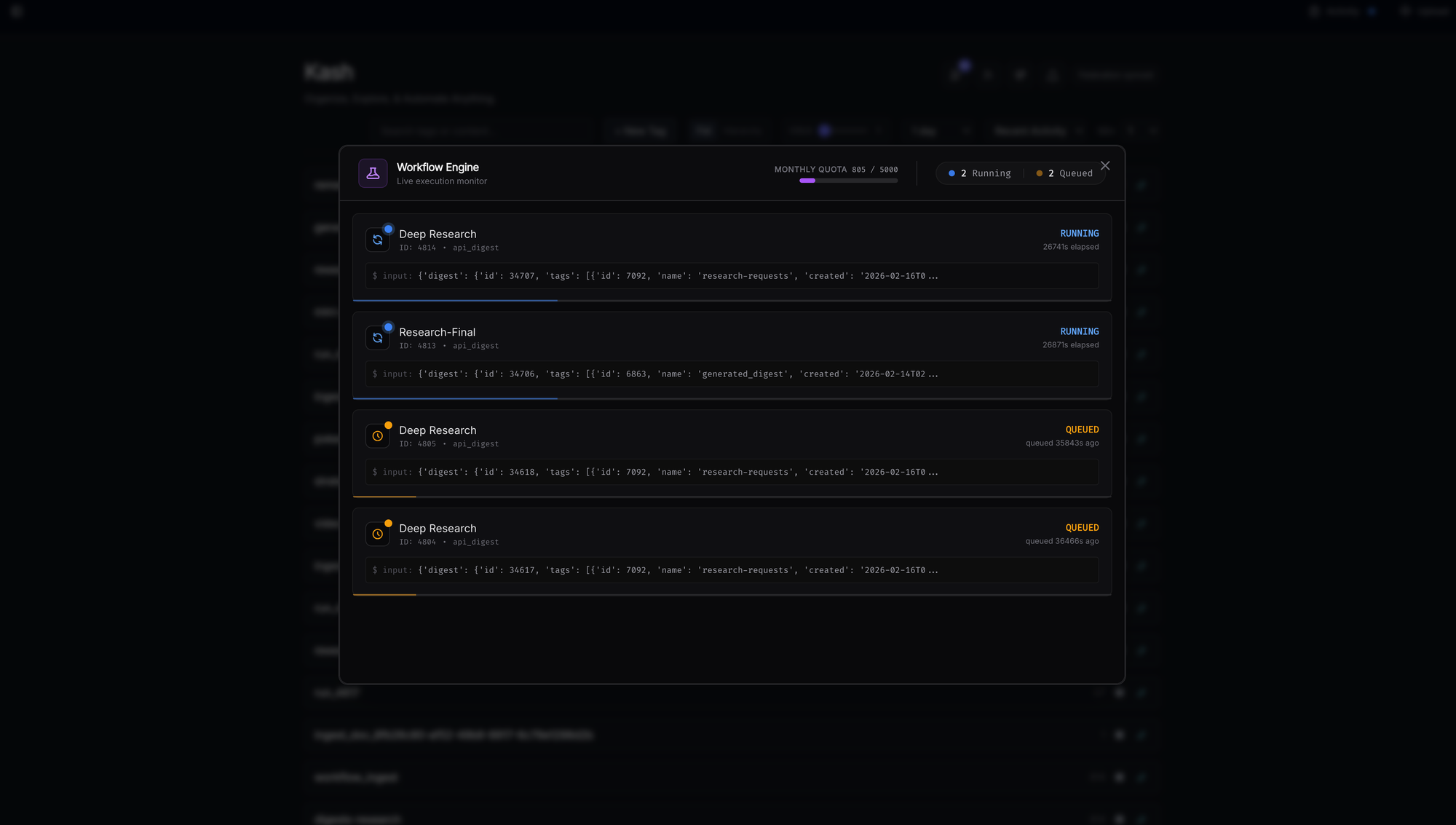
Workflow Engine Upgrades
Workflows retain the original set of step types, but Pulse v1 significantly expands their capabilities:
- Generation of image and audio artifacts
- Posting results to other nodes
- Pulling data directly from pods
- A substantially improved assistant experience in the GUI for designing and configuring workflows
In addition, the swarm search functionality previously associated with vector search is now applied to retrieved digests within workflows. Thanks to reliability and performance improvements made over the past several months, this approach is sustainable for all customers and integrates naturally into existing workflow execution.
The result is a workflow system that is more expressive, more collaborative, and easier to scale.
Consolidating Functionality
Explore and vector search were, in practice, the same tool. In Pulse v1, this functionality has been fully consolidated into the workflow engine.
Rather than maintaining parallel systems with overlapping responsibilities, we’ve reduced complexity by folding exploration and search behavior into workflows where they are most useful. This simplifies both the product surface area and the mental model for users.
Overmind, Simplified
Overmind no longer collects embeddings in Pulse v1.
While we are retaining the underlying code and can re-enable embedding-based matching if user interest resurfaces, the current implementation has been simplified to a keyword-based search over profiles. This reflects actual usage patterns while keeping the door open for future expansion.
Backend Upgrades
Pulse v1 includes substantial backend improvements:
- Migration to a proper async framework
- Introduction of caching
- Use of job queues instead of waiting on HTTP responses
These changes improve reliability, reduce latency, and make large or long-running workflows significantly more stable.
Upgrade Deadline: March 15
Pulse v1 is a breaking upgrade.
All users must upgrade by March 15. After that date, all remaining legacy systems will be upgraded.

Member discussion: